


Bridget Baskerville
Conduit
13 feb. — 4 apr. 2026
Bridget Baskerville
Conduit
13 feb. — 4 apr. 2026
Image: Bridget Baskerville, East Boyd Bay (detail), 2024, corroded brass, courtesy the artist.
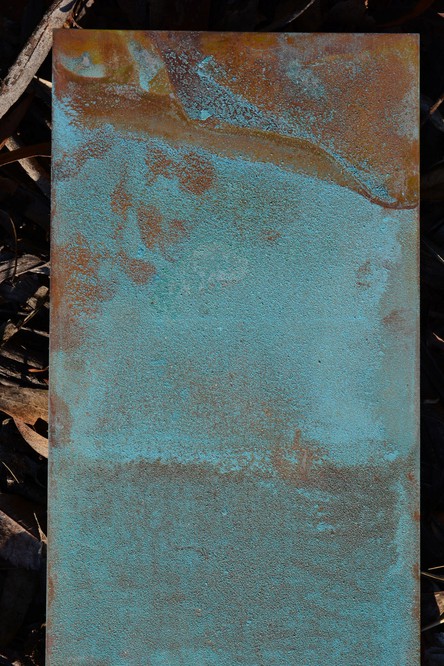
Image: Bridget Baskerville, East Boyd Bay (detail), 2024, corroded brass, courtesy the artist.
Bridget Baskerville
Conduit
13 feb. — 4 apr. 2026
Based between Canberra (Ngunawal Ngambri Country) and Kandos (Dabee Wiradjuri Country), Bridget Baskerville presents Conduit, an exhibition that examines the relationship between human bodies, water bodies and extractive industries.
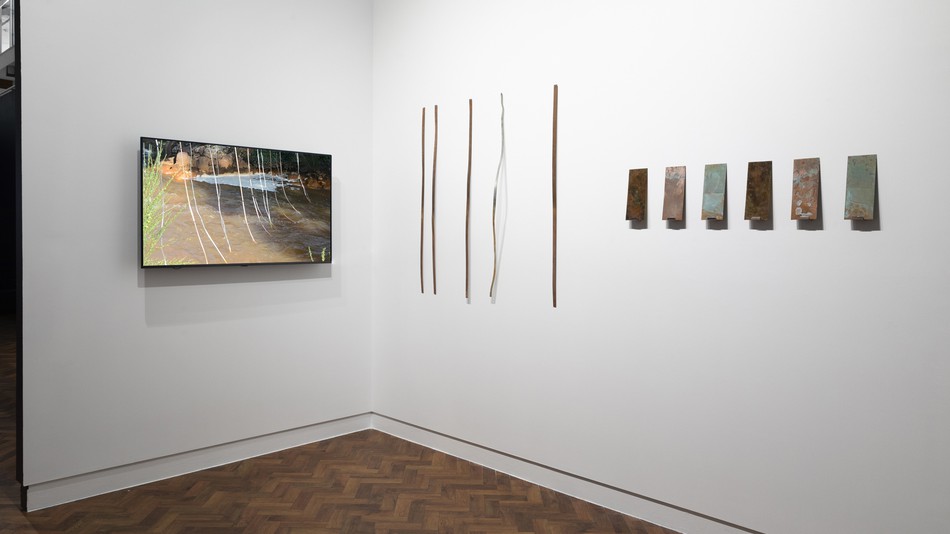
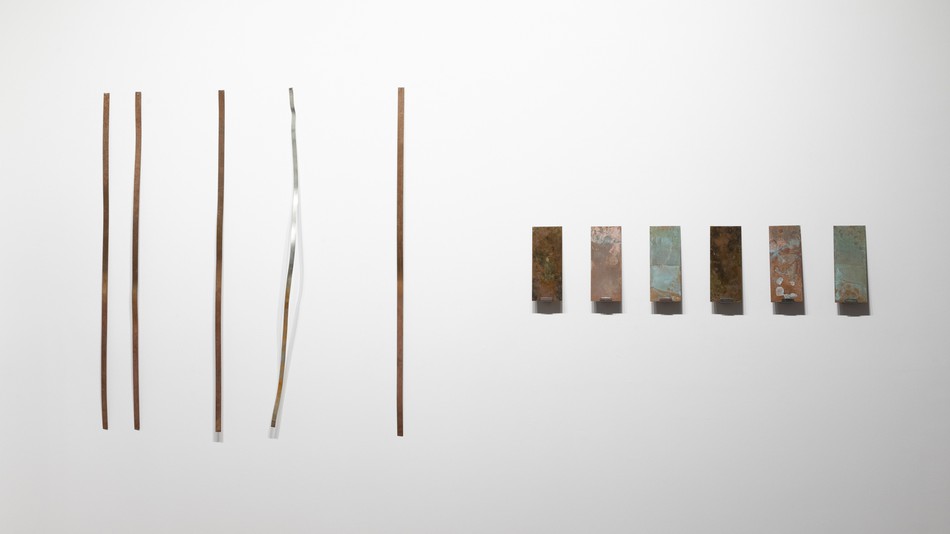
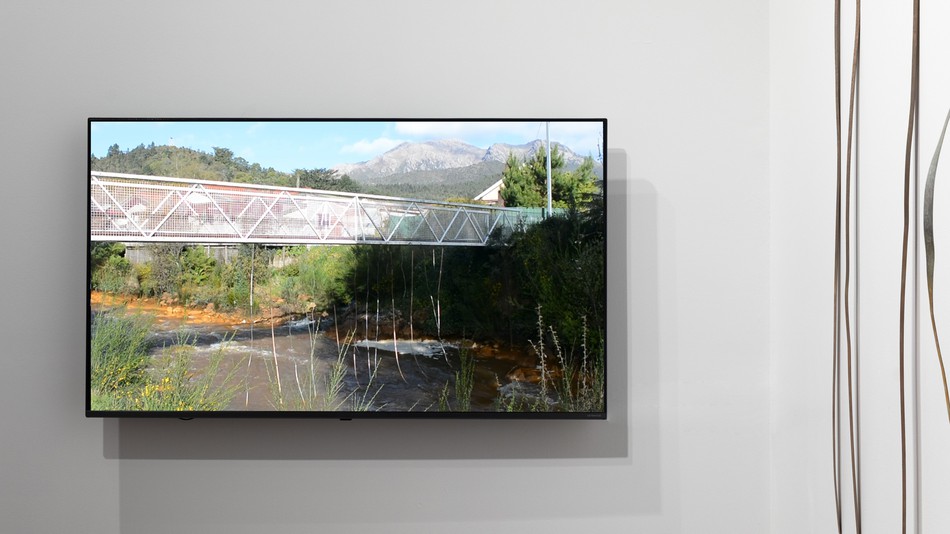
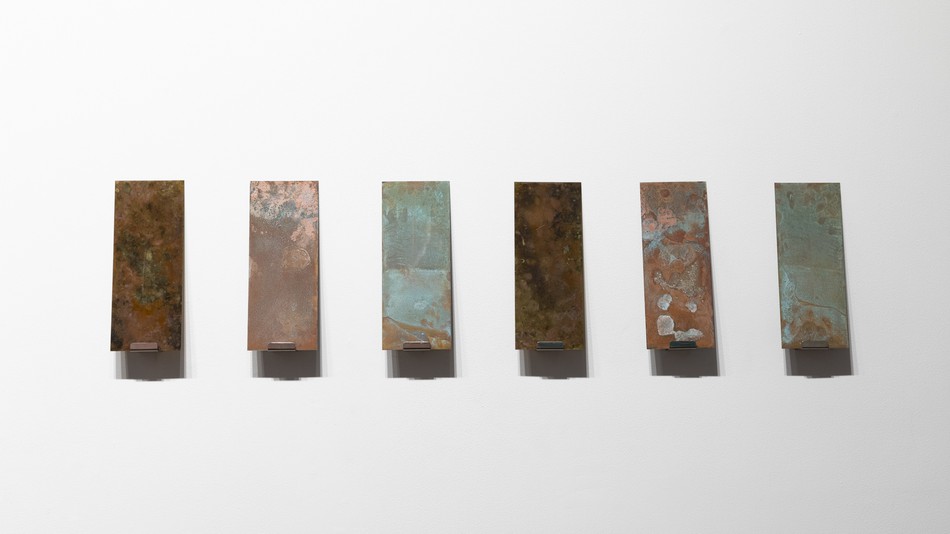
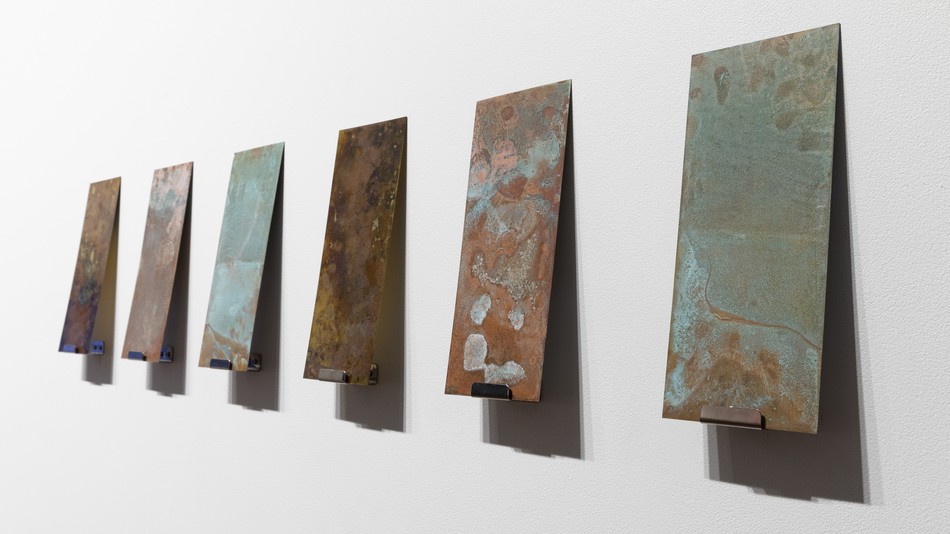
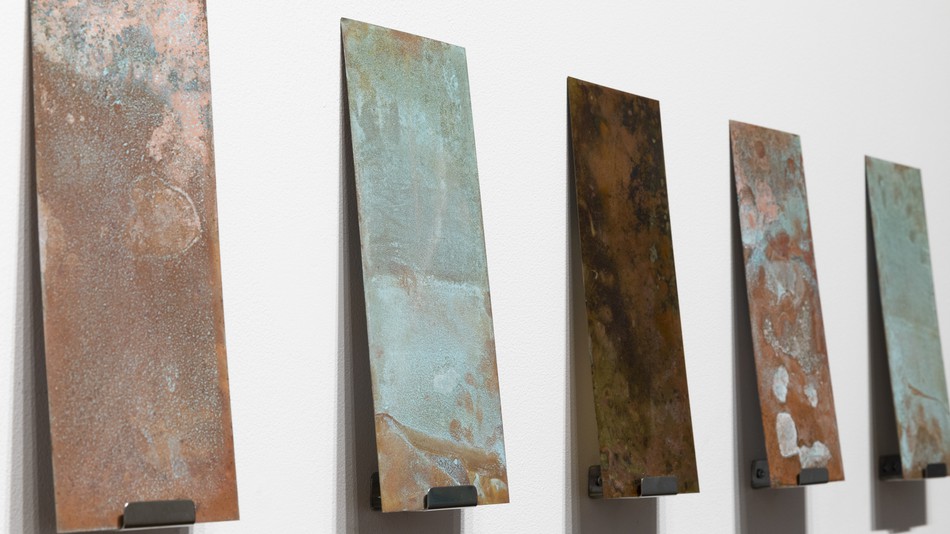
Conduit features a series of copper and tinned copper strips that have been installed over the Queen River in Queenstown, Lutruwita/Tasmania. The Queen River is one of the most polluted rivers in Australia, due to tailings and runoff from the Mount Lyell Copper Mine over multiple decades. Parts of the copper strips have been submerged and corroded, this process etches fine details on the plates’ surface, including the artist’s own fingerprints from the handling of the metal. These marks made on the plates surface reflect the agency of this water, through the colour, textures and remaining sediment. This process also acts as a form of collaboration with non-human bodies, to further reflect the relationship between human and non-human.


6
Installation image Bridget Baskerville ‘Conduit’ featuring ‘Overflow’ 2025, single channel video with sound, corroded copper, corroded tin, copper and ‘Cudgegong’, 2025, corroded brass, ‘Wollondilly’, 2026, corroded brass and ‘East Boyd Bay’ 2025, corroded brass. Courtesy the artist. Photograph: Silversalt Photography.
Installation image Bridget Baskerville ‘Conduit’ featuring ’Overflow’, (detail), 2025, corroded copper, corroded tin, copper and, ‘Cudgegong’, 2025, corroded brass, ‘Wollondilly’, 2026, corroded brass and ‘East Boyd Bay’ 2025, corroded brass. Courtesy the artist. Photograph: Silversalt Photography.
Installation image Bridget Baskerville ‘Conduit’ featuring ‘Overflow’ (detail) 2025, single channel video with sound, corroded copper, corroded tin, copper. Courtesy the artist. Photograph: Silversalt Photography.
Installation image Bridget Baskerville ‘Conduit’ featuring ‘Cudgegong’, 2025, corroded brass, ‘Wollondilly’, 2026, corroded brass and ‘East Boyd Bay’ 2025, corroded brass. Courtesy the artist. Photograph: Silversalt Photography.
Installation image Bridget Baskerville ‘Conduit’ featuring ‘Cudgegong’, 2025, corroded brass, ‘Wollondilly’, 2026, corroded brass and ‘East Boyd Bay’ 2025, corroded brass. Courtesy the artist. Photograph: Silversalt Photography.
Installation image Bridget Baskerville ‘Conduit’ featuring ‘Cudgegong’, 2025, corroded brass, ‘Wollondilly’, 2026, corroded brass and ‘East Boyd Bay’ 2025, corroded brass. Courtesy the artist. Photograph: Silversalt Photography.
Image: Bridget Baskerville, East Boyd Bay (detail), 2024, corroded brass, courtesy the artist.
Bridget Baskerville
Conduit
13 feb. — 4 apr. 2026
Based between Canberra (Ngunawal Ngambri Country) and Kandos (Dabee Wiradjuri Country), Bridget Baskerville presents Conduit, an exhibition that examines the relationship between human bodies, water bodies and extractive industries.
Conduit features a series of copper and tinned copper strips that have been installed over the Queen River in Queenstown, Lutruwita/Tasmania. The Queen River is one of the most polluted rivers in Australia, due to tailings and runoff from the Mount Lyell Copper Mine over multiple decades. Parts of the copper strips have been submerged and corroded, this process etches fine details on the plates’ surface, including the artist’s own fingerprints from the handling of the metal. These marks made on the plates surface reflect the agency of this water, through the colour, textures and remaining sediment. This process also acts as a form of collaboration with non-human bodies, to further reflect the relationship between human and non-human.
6
Installation image Bridget Baskerville ‘Conduit’ featuring ‘Overflow’ 2025, single channel video with sound, corroded copper, corroded tin, copper and ‘Cudgegong’, 2025, corroded brass, ‘Wollondilly’, 2026, corroded brass and ‘East Boyd Bay’ 2025, corroded brass. Courtesy the artist. Photograph: Silversalt Photography.
Installation image Bridget Baskerville ‘Conduit’ featuring ’Overflow’, (detail), 2025, corroded copper, corroded tin, copper and, ‘Cudgegong’, 2025, corroded brass, ‘Wollondilly’, 2026, corroded brass and ‘East Boyd Bay’ 2025, corroded brass. Courtesy the artist. Photograph: Silversalt Photography.
Installation image Bridget Baskerville ‘Conduit’ featuring ‘Overflow’ (detail) 2025, single channel video with sound, corroded copper, corroded tin, copper. Courtesy the artist. Photograph: Silversalt Photography.
Installation image Bridget Baskerville ‘Conduit’ featuring ‘Cudgegong’, 2025, corroded brass, ‘Wollondilly’, 2026, corroded brass and ‘East Boyd Bay’ 2025, corroded brass. Courtesy the artist. Photograph: Silversalt Photography.
Installation image Bridget Baskerville ‘Conduit’ featuring ‘Cudgegong’, 2025, corroded brass, ‘Wollondilly’, 2026, corroded brass and ‘East Boyd Bay’ 2025, corroded brass. Courtesy the artist. Photograph: Silversalt Photography.
Installation image Bridget Baskerville ‘Conduit’ featuring ‘Cudgegong’, 2025, corroded brass, ‘Wollondilly’, 2026, corroded brass and ‘East Boyd Bay’ 2025, corroded brass. Courtesy the artist. Photograph: Silversalt Photography.